Saturday, 8 October 2022

Maps and universe-Space-STEM


What is the universe?

The universe is everything. It includes all of space, and all the matter and energy that space contains. It even includes time itself and, of course, it includes you.

Earth and the Moon are part of the universe, as are the other planets and their many dozens of moons. Along with asteroids and comets, the planets orbit the Sun. The Sun is one among hundreds of billions of stars in the Milky Way galaxy, and most of those stars have their own planets, known as exoplanets.

The Milky Way is but one of billions of galaxies in the observable universe — all of them, including our own, are thought to have supermassive black holes at their centers. All the stars in all the galaxies and all the other stuff that astronomers can’t even observe are all part of the universe. It is, simply, everything.

Earth is a planet, and it’s in space and part of the universe just like the other planets. It just so happens that things live here and the environment near the surface of this particular planet is hospitable for life as we know it. Earth is a tiny, fragile exception in the cosmos. For humans and the other things living on our planet, practically the entire cosmos is a hostile and merciless environment.

This true-color image shows North and South America as they would appear from space 22,000 miles (35,000 km) above the Earth. The image is a combination of data from two satellites

How old is Earth?

Our planet, Earth, is an oasis not only in space, but in time. It may feel permanent. For nearly two-thirds of the time since the universe began, Earth did not even exist. Nor will it last forever in its current state. 

By studying the radioactive decay of isotopes on Earth and in asteroids, scientists have learned that our planet and the solar system formed around 4.6 billion years ago. The universe, on the other hand, appears to be about 13.8 billion years old.

Only a few hundred years ago, when people began systematically investigating the nature of things, the word “scientist” didn’t even exist (researchers were instead called “natural philosophers” for a time). Since then, our knowledge of the universe has repeatedly leapt forward. It was only about a century ago that astronomers first observed galaxies beyond our own, and only a half-century has passed since humans first began sending spacecraft to other worlds.

 In the early 21st century alone, astronomers discovered thousands of planets around other stars, detected gravitational waves for the first time and produced the first image of a black hole.


 The universe has existed roughly 56,000 times longer than our species has.


https://svs.gsfc.nasa.gov/965

https://www.adventuresci.org/wp-content/uploads/2022/09/2022-10-star-chart.pdf https://www.adventuresci.org/starcharts/
https://youtu.be/_O7JAdra26I


You get to decide how to make your satellite—its all up to you. While you are building your satellite, though, keep in mind that your satellite must have a couple of basic things:
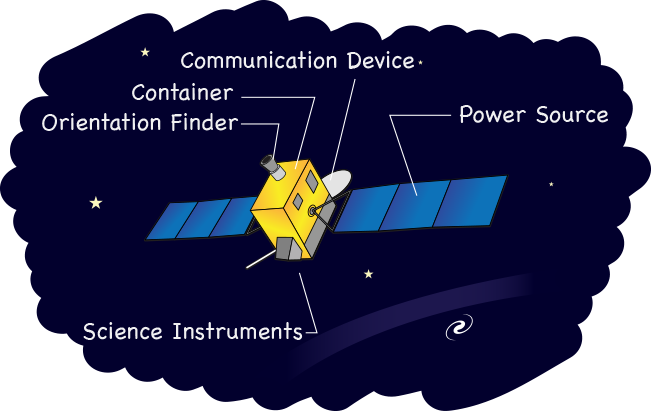
diagram of the basic components of a satelllite.

Click on the image to see what a real satellite looks like!


icon of a containerContainer: Your satellite needs some sort of container to hold all of the gizmos together and keep its instruments safe.
icon of a solar panelPower Source: You will need something to give your satellite electricity so that it can run all of its high-tech gizmos. Solar panels or fancy batteries are two options.
icon of a instruments

Scientific Instruments: This is the why you launched your satellite in the first place! Instruments can take pictures of far away galaxies or planets right here in our Solar System, measure chemicals in Earth's atmosphere, or keep a close eye on our Sun's activity. It's your decision!

icon of a instrumentsCommunication Device: You will need some way to communicate with Earth. Antennas (shaped like dishes or poles and rods) are a good way to do this.
Orientation Finder: Make sure you have something that lets your satellite know where it's pointed and which way is 'up.' Something that looks at the stars (a star tracker) or the sun (a sun tracker) would work.

Here's Some Examples...

a model satellite built with described supplies.
<
>

Non-Edible Satellite 1

  • Container: small juice box.
  • Power source: battery made from a yellow sponge.
  • Instruments: small plastic dish attached with a pick-up stick.
  • Communication: Radio dish made with half a styrofoam ball, black construction paper, and a part of a pick-up stick.
  • Orientation finder: star tracker made from a screw.
  • Held together with: Scotch tape.

Sunday, 2 October 2022

Natural disasters

 How much do you know about natural disasters?

Are there any natural disasters that your country has experienced?
Have you ever been a witness in any disaster?
Could you describe it? How did you feel?
What do you believe the people should do to avoid these disasters?
Do you know what to do in a case of a disaster?

Tilly Smith, the girl who remembered a lesson that saved 100 lives


AUGUST 2021-GREECE


ZOOM EARTH: fore in real time 


"From space we can view the Earth as a whole system, observe the net results of complex interactions, and begin to understand how the planet is changing in response to natural and human influences."


If there's a chance a tsunami is on its way, you don't want to be near the coast. So how can we tell if a tsunami is coming? We use satellites!

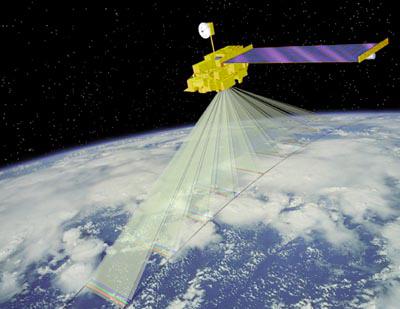
Visualization of the MISR instrument.

The MISR instrument on the Terra satellite takes pictures from different angles to look for tsunamis. Credit: NASA/JPL/Shigeru Suzuki and Eric M. De Jong, Solar System Visualization Project

MISR (the Multi-angle Imaging SpectroRadiometer) is a NASA tool that watches for tsunamis from space. It has nine cameras, all pointed in slightly different directions. As the satellite passes overhead, it takes nine pictures of the same spot from different angles.

MISR can see sunlight reflecting off ripples and waves. Satellites that look straight down cannot see these ripples.

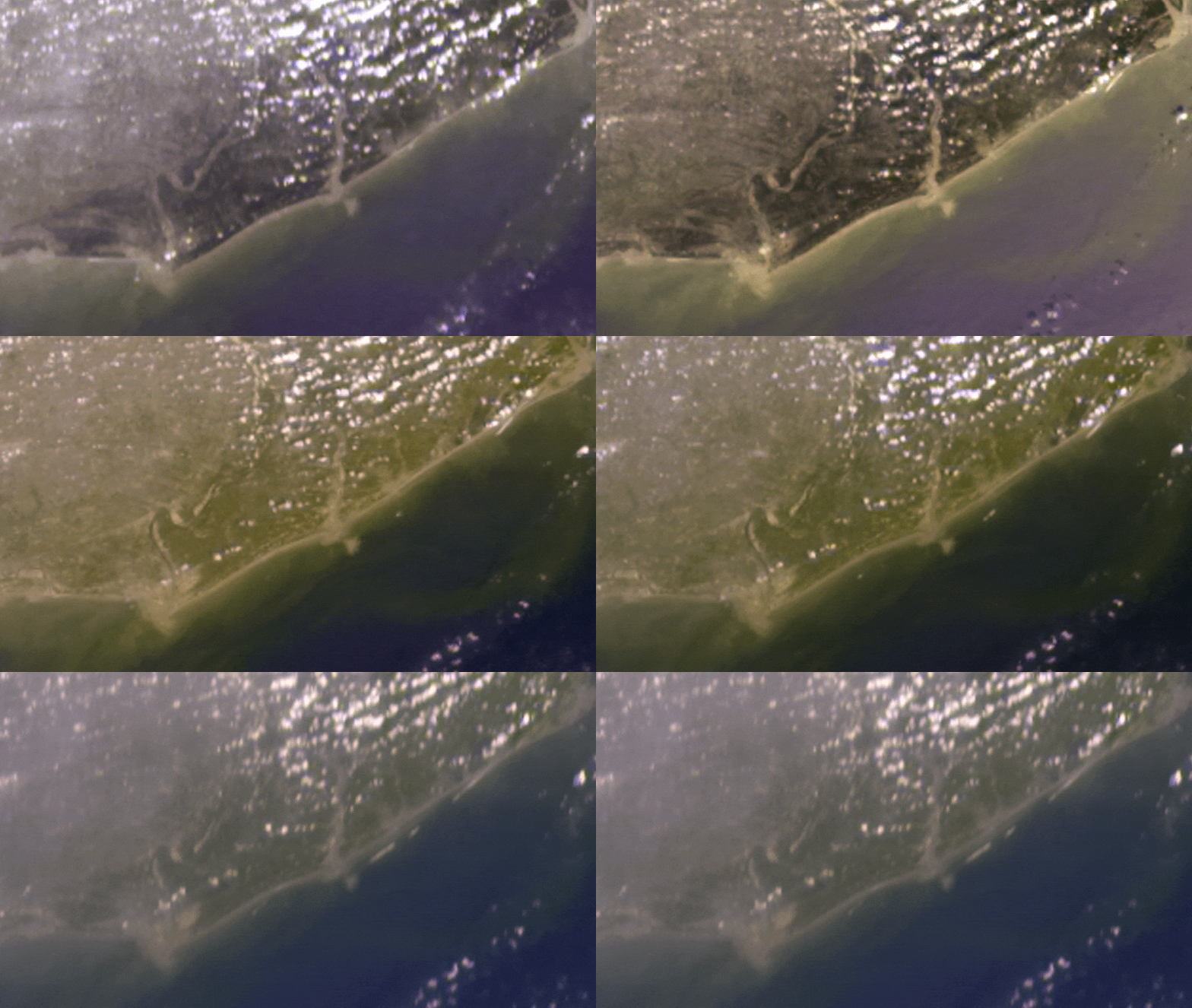
Series of MISR pictures was taken over six minutes on December 26, 2004. It shows tsunami waves breaking on the southeast coastline of India.

This series of MISR pictures was taken over six minutes on December 26, 2004. It shows tsunami waves breaking on the southeast coastline of India. Credit: NASA/GSFC/LaRC/JPL, MISR Team

These images help scientists understand how tsunamis work. The more we learn about tsunamis, the better we can predict where, when and how strong a tsunami will be. That way, people can have enough warning to get away and stay safe.

WHAT CAN WE DO TO PREVENT TSUNAMI


https://youtu.be/DZZFPCY6RlE


Saturday, 4 June 2022

Recycle city game


Before Reading Water is an extremely important resource. Talk about where water comes from. Talk about rivers, lakes and groundwater Ask the children where they think the water goes after they flush the toilet or pour it down the drain. Discuss how they think the water is cleaned and if they think it can be used again even for drinking.

READ A BOOK HERE:


When Zoe is magically transported down the plughole of the bath she sees some very interesting images in the air bubbles. Discuss these images. How many of the children bring a plastic bottle of water to school? How many bring a reusable drinks container? 
• Fred tells Zoe and Pedro that they are partly to blame that his habitat is polluted and dirty. Discuss with the children what they think Fred could mean by this. Do they agree with Fred? 
• Zoe and Pedro help Fred to clean up. Look at the different objects that they find there. How do the children think such object arrived in his habitat? Would they believe that some of them had been flushed down the toilet (eg cotton buds)? Talk about rubbish on the street and what happens to it when there is a lot of rain. • Look at the different village scenes and discuss the different ways people are polluting and wasting the water. Can you think of any other ways that people pollute or waste water? 
• Sometimes the local council has to turn off the water because they need to do some repair works such as leaking pipes. Have any of the children ever experienced this? If yes, how did it affect their daily routine? How did they prepare for it? If no, can they imagine what it would be like to have a day when no water was available? What would be the worst thing about having no water?

Follow-up activities 
• Try to calculate how much water you use in a day. For example, flushing the toilet uses about 7 litres of water. How much do you or your class flush away in a day? Good practice for the 7 times table! 
• There are many causes of water pollution: industrial waste, pesticides, domestic detergents, chemical and oil spillages. All these can end up in our rivers and seas. Try pouring a little engine oil on some water and notice what happens. Experiment with cleaning the water by filtering it, then by using cotton wool, paper towels etc. What happens when you add detergent? 
• Take the class on a trip around the school. Check out all the taps, make sure there are no leaks, make sure that all the toilets flush properly and none of them keep running after being flushed. Make a list of any problems you find and present them to the head of the school and explain why it is important that they are fixed as soon as possible. 
• Take a trip to a local supermarket and show the children the organic foodstuffs that are available and why they are better for both them and the environment than those that are treated by chemicals. Look for other products on the shelves that are an environmentally friendly alternative to perhaps their more familiar brands. 
• Look at some videos from other countries where there is a water shortage. Discuss the differences and draw pictures to compare how families there use water with how you use it.
 • Go pond dipping! Draw creatures and plants carefully to identify later. Make sure you return all wildlife to its natural habitat. See if there are any signs of pollution in the pond? 
• Marine litter (plastic soup) is a big problem. Search on the internet to find images of these floating plastic garbage patches. Working in groups or as individuals have the children make a poster to explain about marine litter. They can bring some objects from home or the beach that can be stuck on to the poster if they like such as bottle tops, plastic hoops from cans, bits of fishing nets, plastic bottles, cotton buds, etc. 
• Working in groups, interview different members of the staff at your school and find out ways to save water. Make a diagram and plan to how this would work and present it to the class. 
• Go on a class trip to your nearest water treatment plant.   


https://www.epa.gov/recycle/reduce-reuse-recycle-resources-students-and-educators

Here you can find a lot of material about recycling
YOU CAN FIND MORE IN "Climate action" in this blog


src="https://www.youtube.com/embed/5EgvXw6IFZs" title="YouTube video player" width="560">


Monday, 30 May 2022

Ο Καραγκιόζης στο Buckingham- an eTwinning project of B1 class

 “Το ψηφιακό θέατρο σκιών μας ενώνει”, μια συνεργασία Πρωτοβάθμιας - Δευτεροβάθμιας Εκπαίδευσης


Η Β1' δημοτικού στο μάθημα των Αγγλικών με την κ.Μαλέα συμμετείχε σε πρόγραμμα eTwinning και συνεργάστηκε για το παραγόμενο προϊόν με το 50ο και 53ο δημοτικό σχολεία Θεσσαλονίκης αλλά και με άλλους εκπαιδευτικούς αλλά και μαθητές Α/θμιας αλλά και Β/θμιας εκπαίδευσης.


Στο πλαίσιο αυτού του έργου οι εκπαιδευτικοί της Α/θμιας Εκπαίδευσης αφού μύησαν τους μαθητές τους στο θέατρο Σκιών, έγραψαν, εικονογράφησαν και ηχογράφησαν τη δική τους ιστορία με πρωταγωνιστή τον Καραγιόζη και τα παιδιά του. 

Τη τελική μορφή στη ψηφιακή ιστορία έδωσαν οι μαθητές του 5ου εσπερινού ΕΠΑΛ Θεσσαλονίκης οι οποίοι υποστήριξαν τους εκπαιδευτικούς της Αθμιας σε τεχνικά θέματα κατά την διαδικασία δημιουργίας ψηφιακών ιστοριών.Οι μαθητές του εσπερινού ΕΠΑΛ είναι μαθητές του Τομέα Πληροφορικής ή μαθητές άλλων ειδικοτήτων με γνώσεις προγραμμάτων επεξεργασίας εικόνας, βίντεο και ήχου.


H εφαρμογή(app) eShadow που χρησιμοποιήθηκε είναι μια εκσυγχρονισμένη εκδοχή του παραδοσιακού Θεάτρου Σκιών.Αναπτύσσεται από το Εργαστήριο Διανεμημένων Πληροφοριακών Συστημάτων/ Εφαρμογών Πολυμέσων,τμήματος ΗΜΜΥ,Πολυτεχνείου Κρήτης.Παρέχει τη δυνατότητα δημιουργίας ψηφιακών παραστάσεων, καταγραφής, διαμοιρασμού & παρακολούθησής μέσω του Διαδικτύου.Στόχος του να αποτελέσει εργαλείο δημιουργικής έκφρασης/μάθησης και να χρησιμοποιηθεί για την δημιουργία παραστάσεων διαφόρων θεμάτων & την εκμάθηση βασικών εννοιών μαθηματικών/πληροφορικής.


Μπορείτε να δείτε την ιστορία μας στον ακόλουθο σύνδεσμο


https://youtu.be/DgTOlYZP0Vs

Miss Daisy is Crazy

Kids' literature

https://drive.google.com/open?id=1ohNtZ3uXVoBZifUA6huvssVxLIyGd_Ed https://quizlet.com/276712812/miss-daisy-is-crazy-chapters-12-flash-...